Chinese Whisperss
Standing in a diagonal line, we passed a movement from one person to the next. The first movement was successful, as it was a simple jump. The second movement had two parts to it. By the time it reached the end of the line, it only had one part to it.
Working With Words
Standing in a circle and trying not to speak at the same time wasn't too difficult. It took a lot of concentration, seeing and listening. Howvever, walking in space and not speaking at the same time proved to be a lot harder. In order for it to be successful it meant that everyone needed to be aware of their 3D self and really open up an awareness to each other.
Movement with Spoken Word
We improvised for 30 seconds with random words in smaller groups, before getting into a larger group. We had to say a sentence from a story, starting with eitheir fortunately or unfortunately, whilst improvising at the same time.
FORTUNATELY the frog found another pair of gloves to swim with
UNFORTUNATELY there was a gaint shark who ate the gloves, and the frog was very upset.
Showing posts with label Movement Studies. Show all posts
Showing posts with label Movement Studies. Show all posts
Wednesday, 7 March 2012

Tuesday, 6 March 2012
Phrase Class
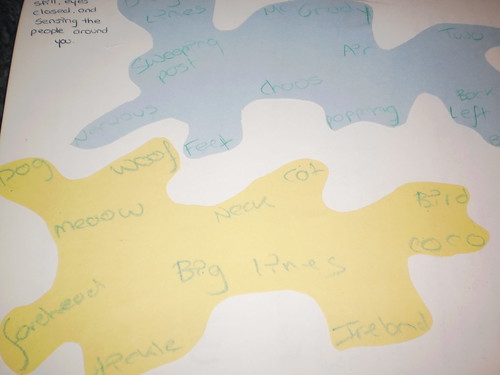
Warming up as you want to:
• Tension in shoulder
• Right hip locked
• Covering all surfaces with the body
Movement
• Moving quickly through space
• Supple feet
• Heels
• Jumping
• Spinning
• Natural eyes
• Taking the head in one direction and the feet in another
• Falling off balance
• Awareness of how the shoulders and arms can get involved and how much they get involved
• Sits bones
• Sliding across the floor
• Clear movements across the floor
• Cross over feet
• Upside down movements
• Working with the unfamiliar
• Tension in shoulder
• Right hip locked
• Covering all surfaces with the body
Movement
• Moving quickly through space
• Supple feet
• Heels
• Jumping
• Spinning
• Natural eyes
• Taking the head in one direction and the feet in another
• Falling off balance
• Awareness of how the shoulders and arms can get involved and how much they get involved
• Sits bones
• Sliding across the floor
• Clear movements across the floor
• Cross over feet
• Upside down movements
• Working with the unfamiliar
Hip Joint
•Taking the leg into the air and bringing it back down again
•The fold is a lot lower than I imagined and has a stronger connection with the ball and socket than I previously though.
•The leg cannot extend fully until the ball and socket has become engaged. It also sometimes requires the stomach muscles to engage too.
•Lying on my back and lifting the legs inti the air, emphasise how small and intricate movements can be initiated from this fold eg: Bending the legs/ Crouch position
Partner Graphic
1.begin lying on the floor
2.take the weight of the leg and rotate the hip
3.move the legs down to the hips to create the fold
4.move the legs like “spaghetti”
5.slowly walking the feet down to the ground
6.brushing both legs out
I noticed how much work the hips actually do in order for legs to move fluidly. There was a stronger sense of connection between the hip and the pelvis, and the overall strength of that area in supporting the body.
•The fold is a lot lower than I imagined and has a stronger connection with the ball and socket than I previously though.
•The leg cannot extend fully until the ball and socket has become engaged. It also sometimes requires the stomach muscles to engage too.
•Lying on my back and lifting the legs inti the air, emphasise how small and intricate movements can be initiated from this fold eg: Bending the legs/ Crouch position
Partner Graphic
1.begin lying on the floor
2.take the weight of the leg and rotate the hip
3.move the legs down to the hips to create the fold
4.move the legs like “spaghetti”
5.slowly walking the feet down to the ground
6.brushing both legs out
I noticed how much work the hips actually do in order for legs to move fluidly. There was a stronger sense of connection between the hip and the pelvis, and the overall strength of that area in supporting the body.
Weight Changes
I began standing in parallel. I slowly moved forwards and backwards, and side to side with small exchanges of weight. I noticed that as my movements got bigger, I really had to engage my stomach muscles to maintain the balance, and having an awareness of a floating skull helped. The more playful my movements became and the more levels I explored, I found it difficult to do with my eyes closed and so began working with letting light into the eyes when I was struggling.
Travelling across the Floor
1.Travelling across the floor staying close together but not looking at each other. I found that it took me ages to cross the floor as I really had to concentrate on not seeing my partner. A strong sense of the 3D self was needed
2.Travelling across the floor, keeping eye contact at all times. I found this easier and much more relaxed and playful than the previous task. It was clear that the movement travelled much more freely and at a quicker speed.
3.Score- Eye contact at the start.
Hannah tries to find my eye contact,I try to look away
Put two pauses in-Don’t have to be at the same time
Play with distance
Travelling across the Floor
1.Travelling across the floor staying close together but not looking at each other. I found that it took me ages to cross the floor as I really had to concentrate on not seeing my partner. A strong sense of the 3D self was needed
2.Travelling across the floor, keeping eye contact at all times. I found this easier and much more relaxed and playful than the previous task. It was clear that the movement travelled much more freely and at a quicker speed.
3.Score- Eye contact at the start.
Hannah tries to find my eye contact,I try to look away
Put two pauses in-Don’t have to be at the same time
Play with distance
Sunday, 27 November 2011
Pelvis Awareness
Points of Focus:
1.Longer strides help to emphasise the fact that it moves from left to right
2.Using the breath feel it dip "like a hiccup" and let it take you up into the air
3.Try it with a spiral and on alternative sides
1.Longer strides help to emphasise the fact that it moves from left to right
2.Using the breath feel it dip "like a hiccup" and let it take you up into the air
3.Try it with a spiral and on alternative sides
Movement Transitions
Points of focus:
1.Sending energy out into space
2.Watching where the skull is in relation to the rest of the body
3.Rocking backwards and forwards, using hands and feet to take the pressure. Remember to keep the spine easy and soft.
1.Sending energy out into space
2.Watching where the skull is in relation to the rest of the body
3.Rocking backwards and forwards, using hands and feet to take the pressure. Remember to keep the spine easy and soft.
Tuesday, 8 March 2011
Points of Focus
1. Remember to be "seeing" all the time!
2. Keep pelvis low in crawling back
3. Move into each transition with fluidity
4. Rolling from pelvis
2. Keep pelvis low in crawling back
3. Move into each transition with fluidity
4. Rolling from pelvis
Monday, 7 March 2011
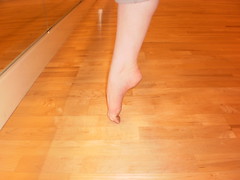
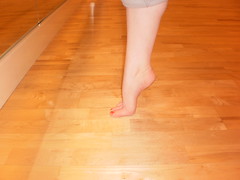
Points of Focus
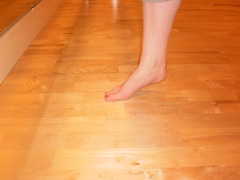
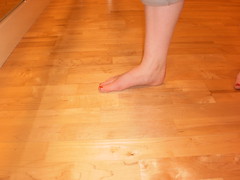
1. Travelling across the floor
2. Keep leg low
3. Keep pelvis dropped
4. Work on turn out of the leg
I feel as though this needs a lot of work and a deeper understanding of how my skull and pelvis work together through this exercise. I need to also work on loosening up my chest and relaxing my shoulders, and most importantly remembering to breathe!!
2. Keep leg low
3. Keep pelvis dropped
4. Work on turn out of the leg
I feel as though this needs a lot of work and a deeper understanding of how my skull and pelvis work together through this exercise. I need to also work on loosening up my chest and relaxing my shoulders, and most importantly remembering to breathe!!
Skinner Class
I really enjoyed this class and picked up some interesting things to remember when I perform any dance.
We spent some time in this class working on the idea of soft feet and travelling across the floor without making any noise. I found that I had to really use the support of my knees to do this by bending them slightly. It was a challenge to travel quickly across the floor and keep the feet and knees soft at the same time.
We also worked with the idea of puppet strings being attched to the top of our skulls. This helped me to think about our skulls floating and to remember to let go of any tension I had in order to do this correctly.
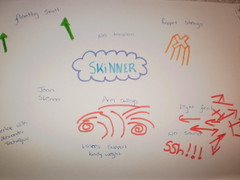
We spent some time in this class working on the idea of soft feet and travelling across the floor without making any noise. I found that I had to really use the support of my knees to do this by bending them slightly. It was a challenge to travel quickly across the floor and keep the feet and knees soft at the same time.
We also worked with the idea of puppet strings being attched to the top of our skulls. This helped me to think about our skulls floating and to remember to let go of any tension I had in order to do this correctly.
Points of Focus
1. Fluidity between spins
2. Keep head low in turning
3. Stretch leg behind, before first spin
4. leg and arm extend at the same time
5. Find the fall at the end before running
2. Keep head low in turning
3. Stretch leg behind, before first spin
4. leg and arm extend at the same time
5. Find the fall at the end before running
Sunday, 6 March 2011
Alexander Technique
Having never really heard of this technique before, let alone taken part in a class, I was both excited and nervous when I was told that we would have 2 different sessions with Lucia Walker. Before the first class I read two articles on the technique to try to come to some understanding of what it was. Theses are a few words that jumped out at me:
Posture
Tension
Breaking Habits
Re-education of the body/mind
Un-doing
Energy awareness
During the session Lucia asked me if I was aware of any ways in which I moved. I explained to her that I tend to walk and stand with my pelvis tilted forward. I was relieved to hear her say that this was a common thing and I wasn’t infact the only human being to do it! She helped me to tilt my pelvis back into the place it should be and then helped me to pull up from my spine. This was a very unusual experience as from the age of 3 with other dance training I’ve been encouraged to pull up from the chest. I found that the minute she corrected this habit, my feet were more stable on the ground and I lost all the tension I had across my shoulders and hip. I also found it interesting to hear her say that many people who walk with their pelvis tilted are more likely to have a hip replacement than those who don’t. Having suffered from a hip injury for the past 3 years, I’m eager to find out if the two are connected in anyway!
Posture
Tension
Breaking Habits
Re-education of the body/mind
Un-doing
Energy awareness
During the session Lucia asked me if I was aware of any ways in which I moved. I explained to her that I tend to walk and stand with my pelvis tilted forward. I was relieved to hear her say that this was a common thing and I wasn’t infact the only human being to do it! She helped me to tilt my pelvis back into the place it should be and then helped me to pull up from my spine. This was a very unusual experience as from the age of 3 with other dance training I’ve been encouraged to pull up from the chest. I found that the minute she corrected this habit, my feet were more stable on the ground and I lost all the tension I had across my shoulders and hip. I also found it interesting to hear her say that many people who walk with their pelvis tilted are more likely to have a hip replacement than those who don’t. Having suffered from a hip injury for the past 3 years, I’m eager to find out if the two are connected in anyway!
Subscribe to:
Posts (Atom)